Stephen Cox: Scultura, Carini Gallery Exhibition Florence, 1987
Stephen Cox: Scultura, Carini Gallery Exhibition Florence, 1987
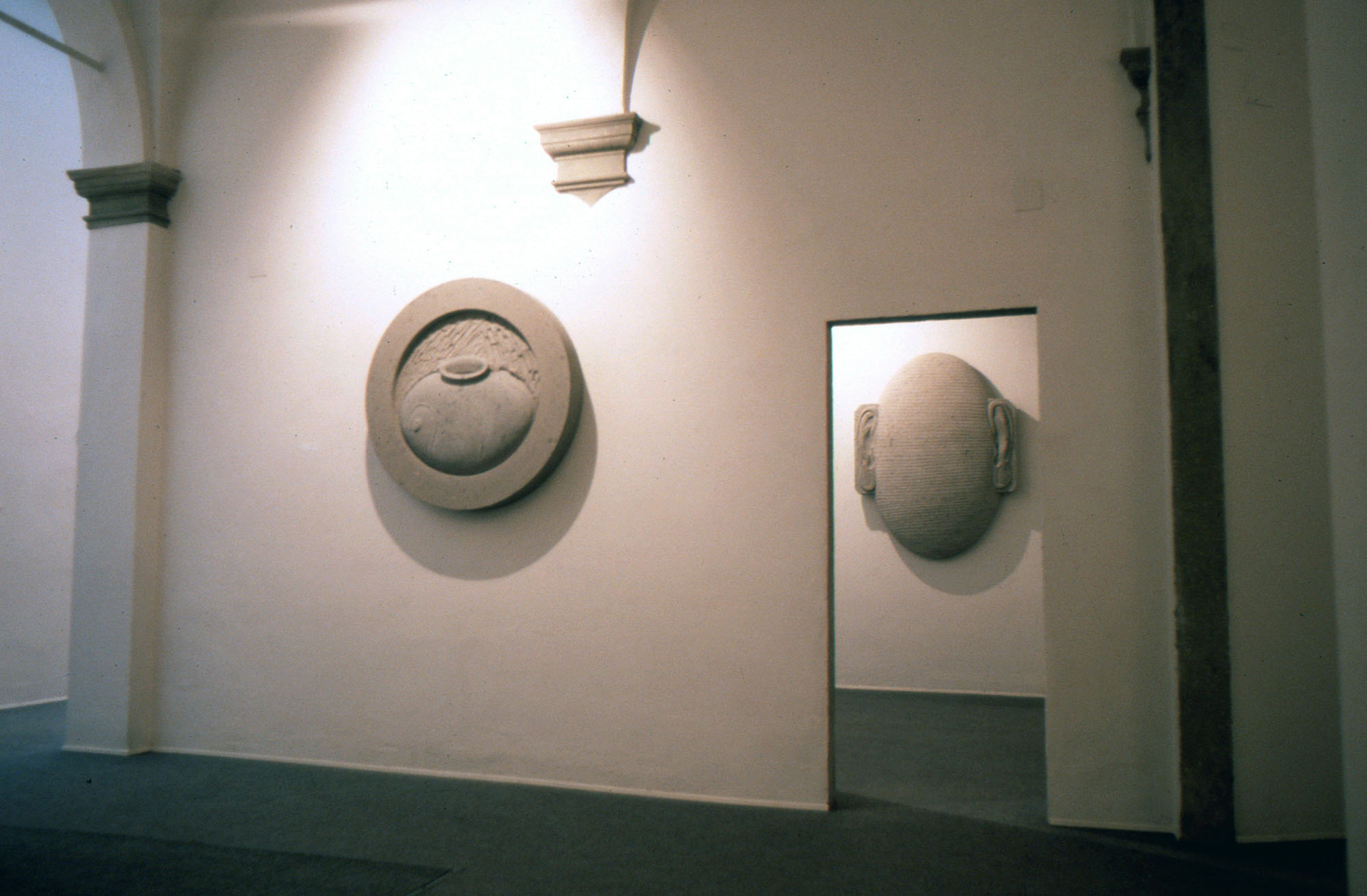
All works made in Perpino stone
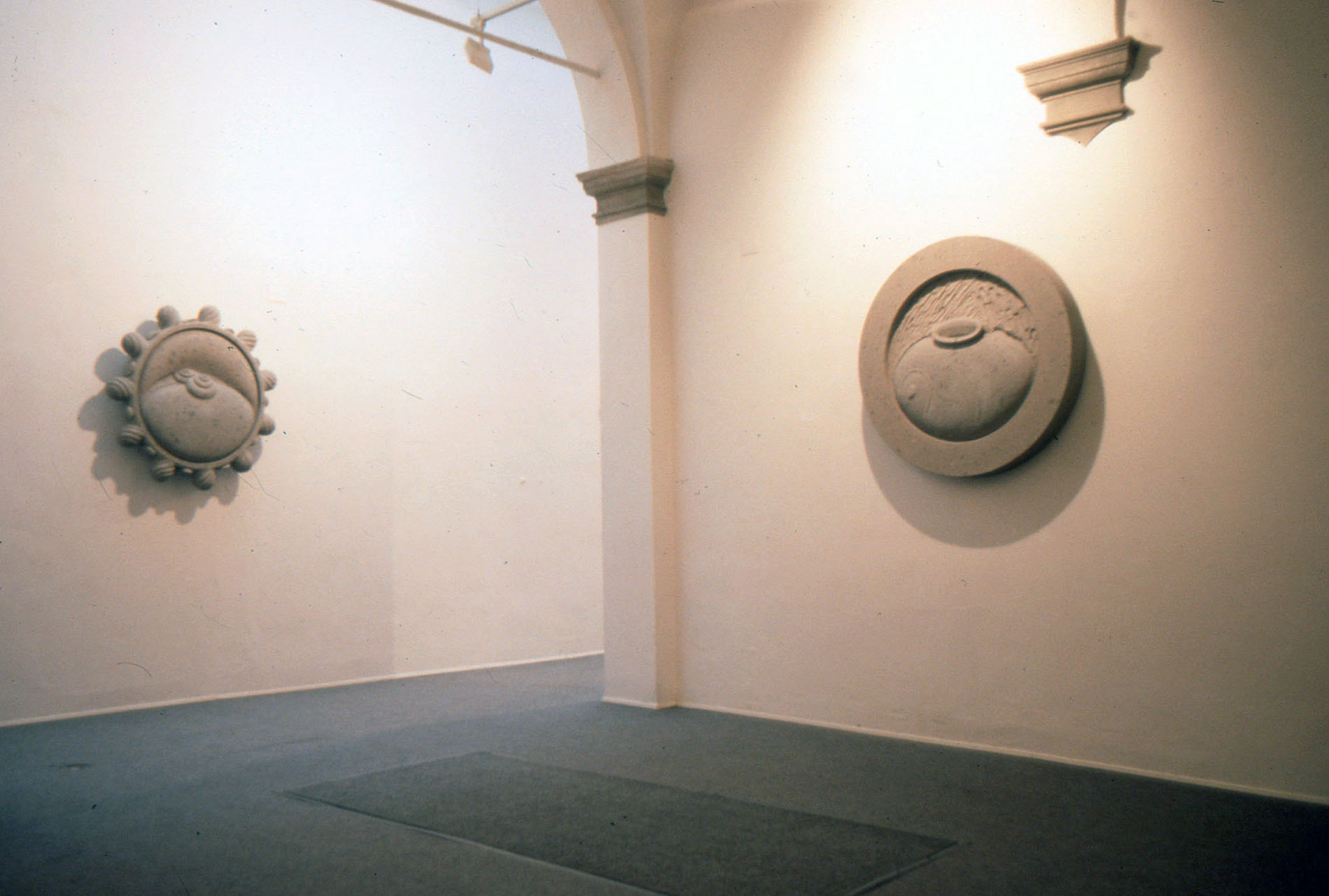
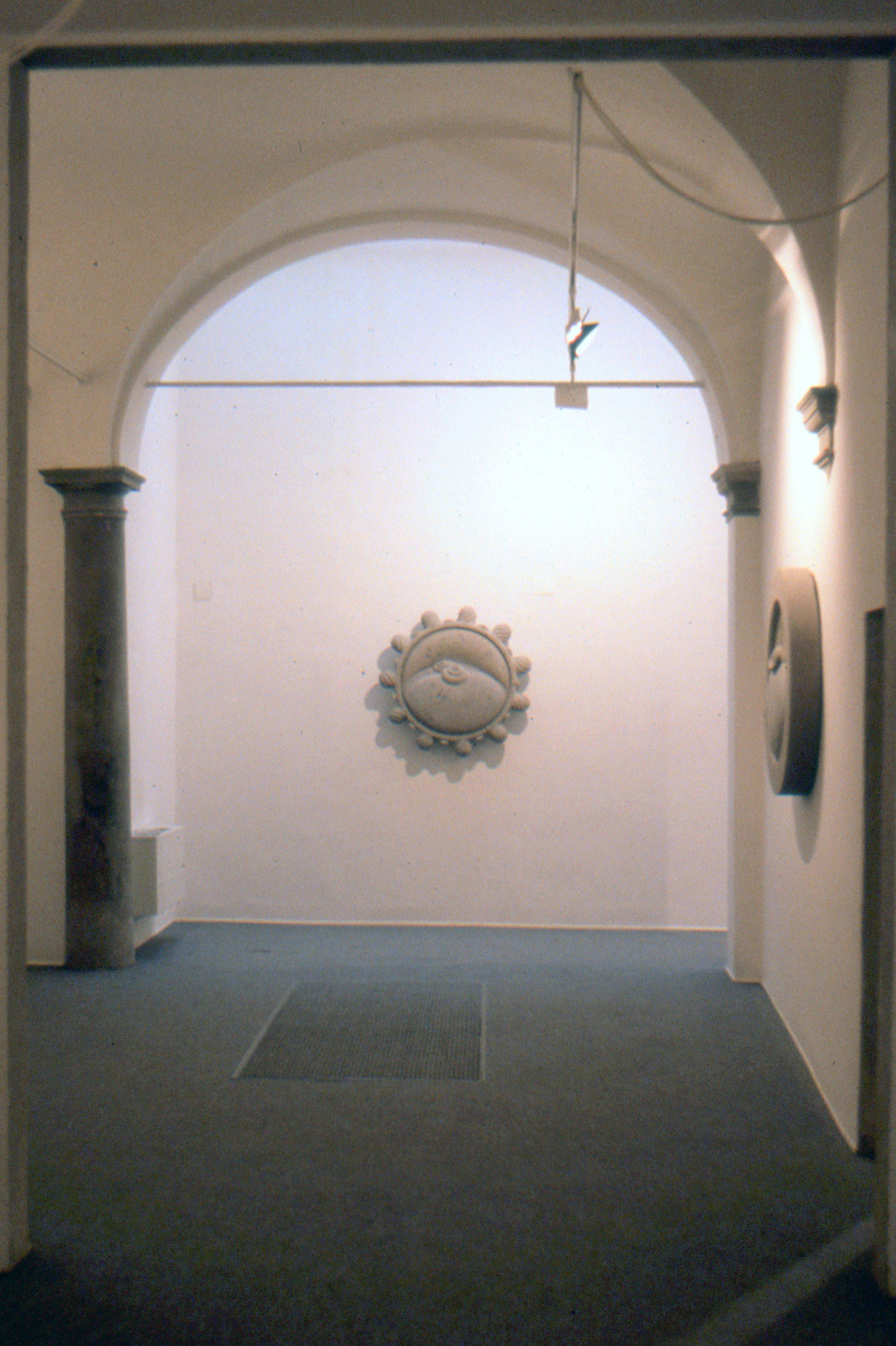
Works above left to right: Tondo: Dono, 1987, Tondo: Sorgente, 1987 & part of Traumatras, 1987
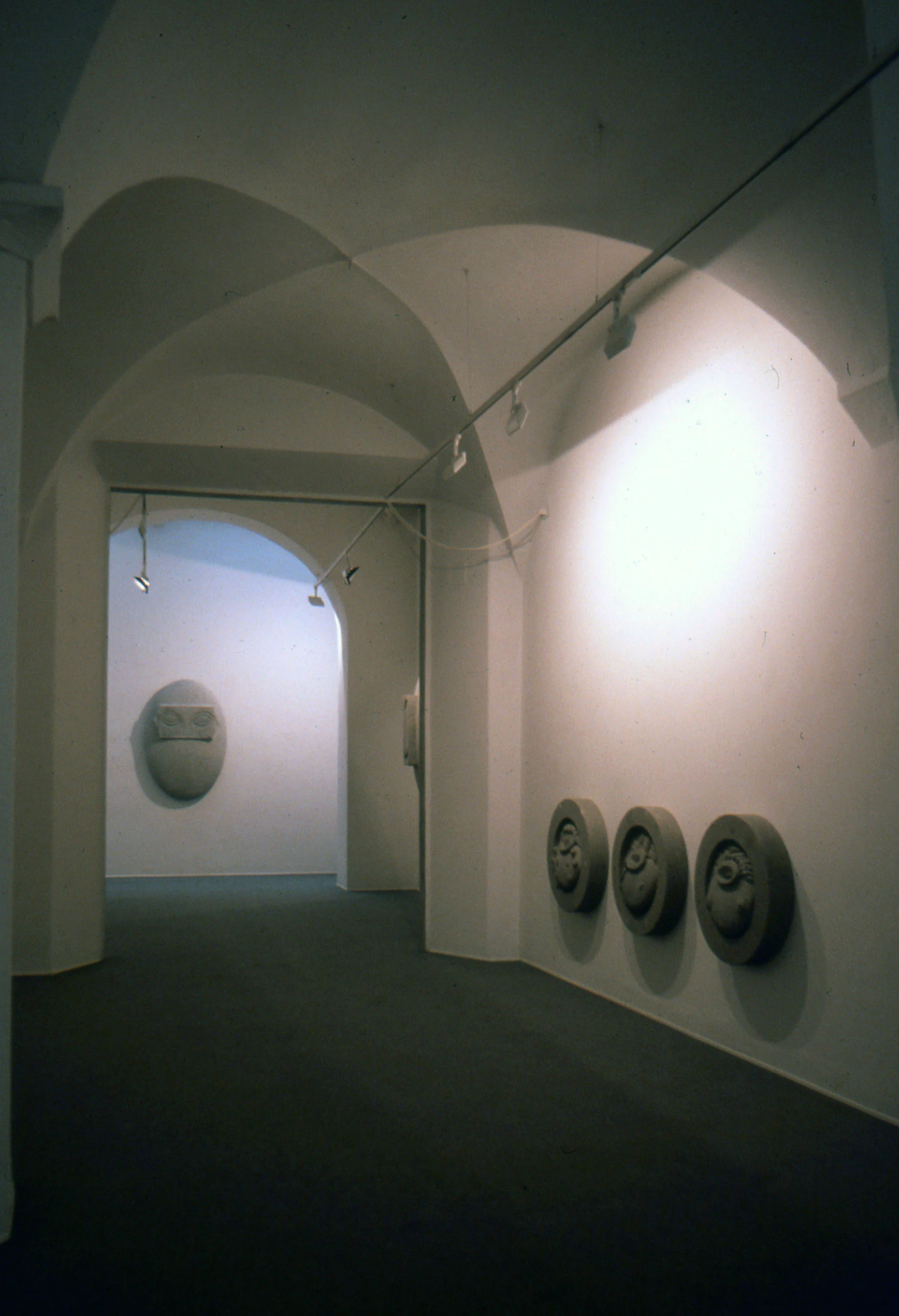


Works above left to right: part of Traumatras, 1987, Olla I, II, & III, 1987, Traumatras I & II, 1987
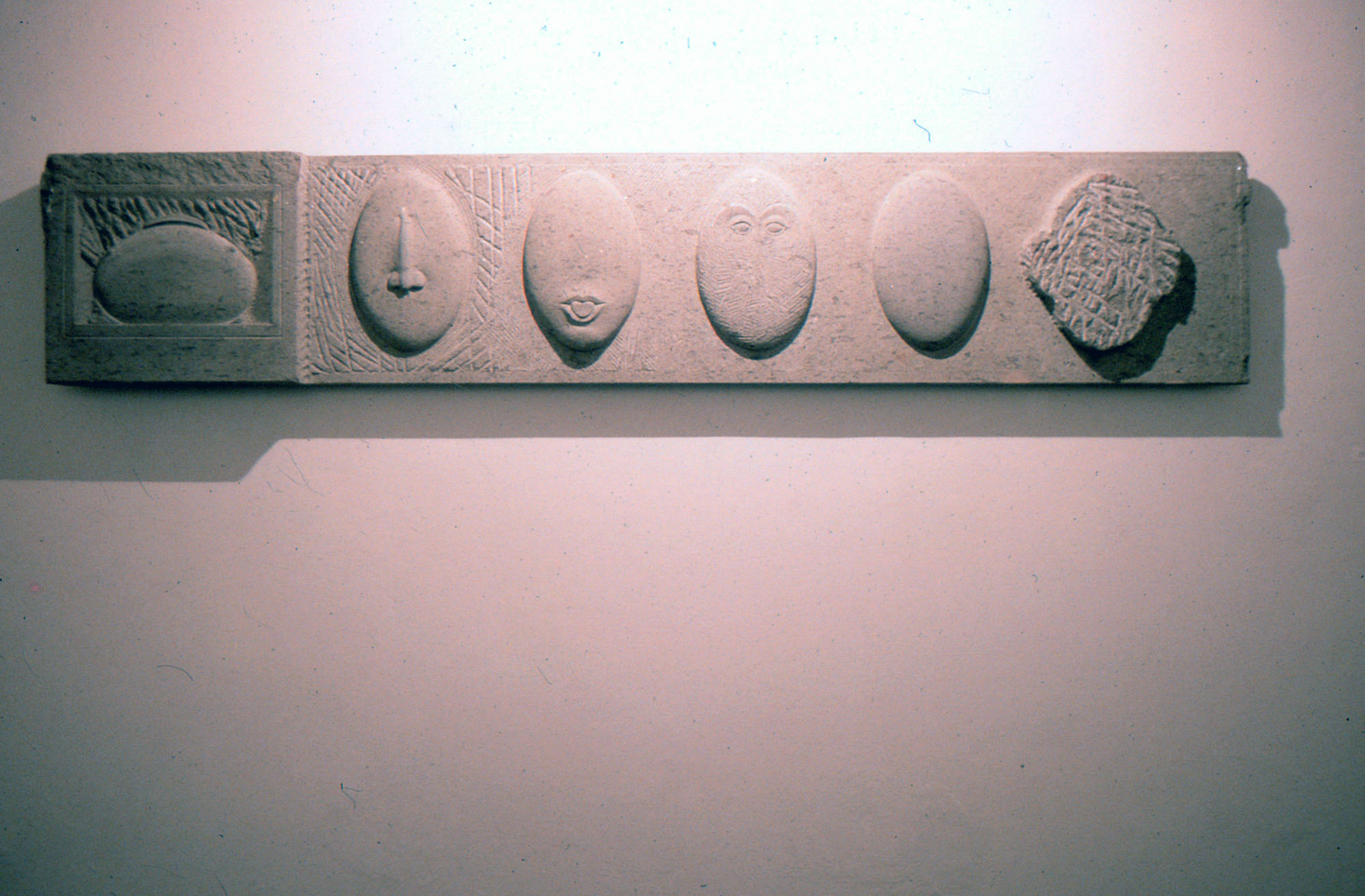

Works above: Circolo, 1987

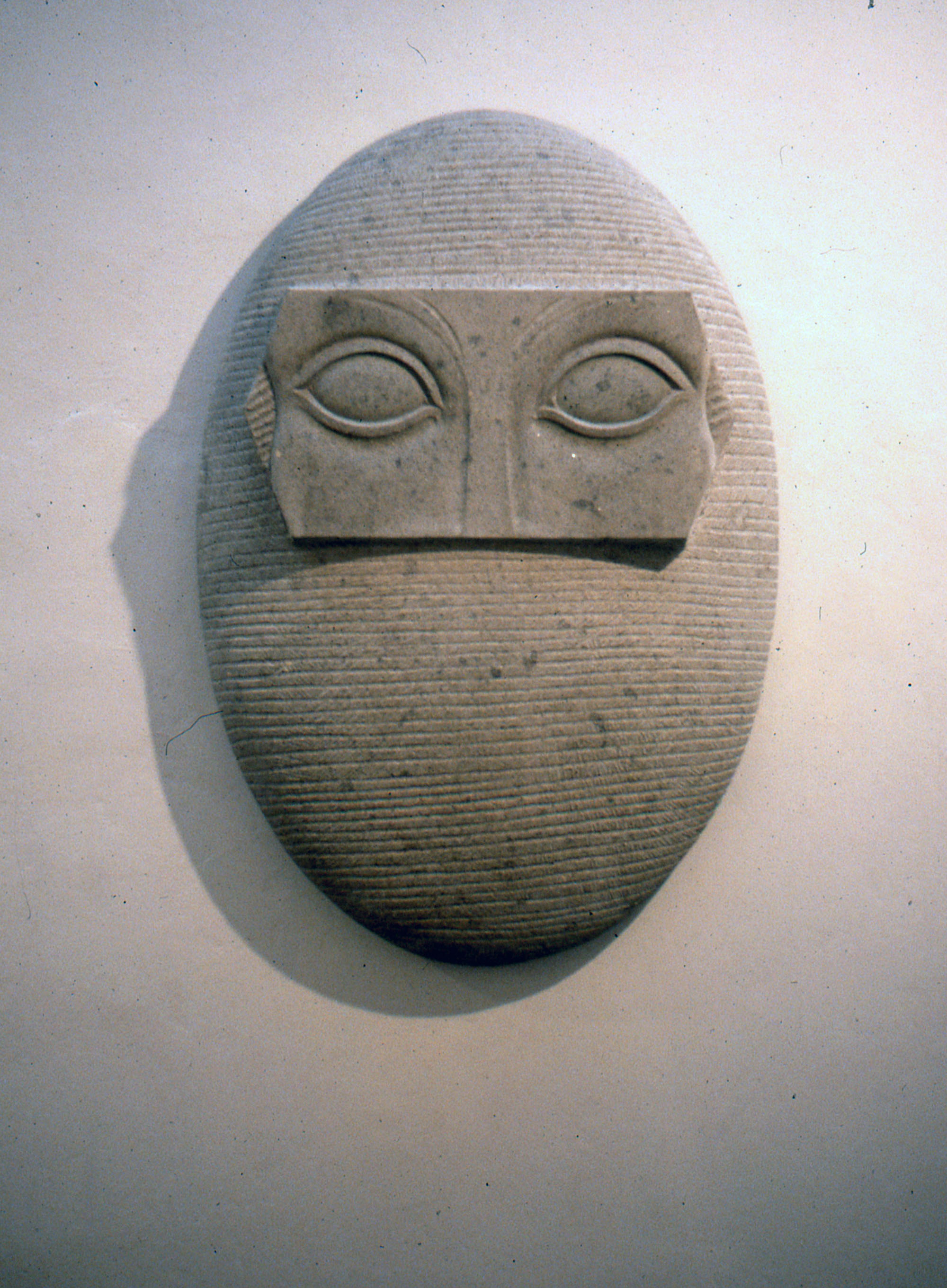


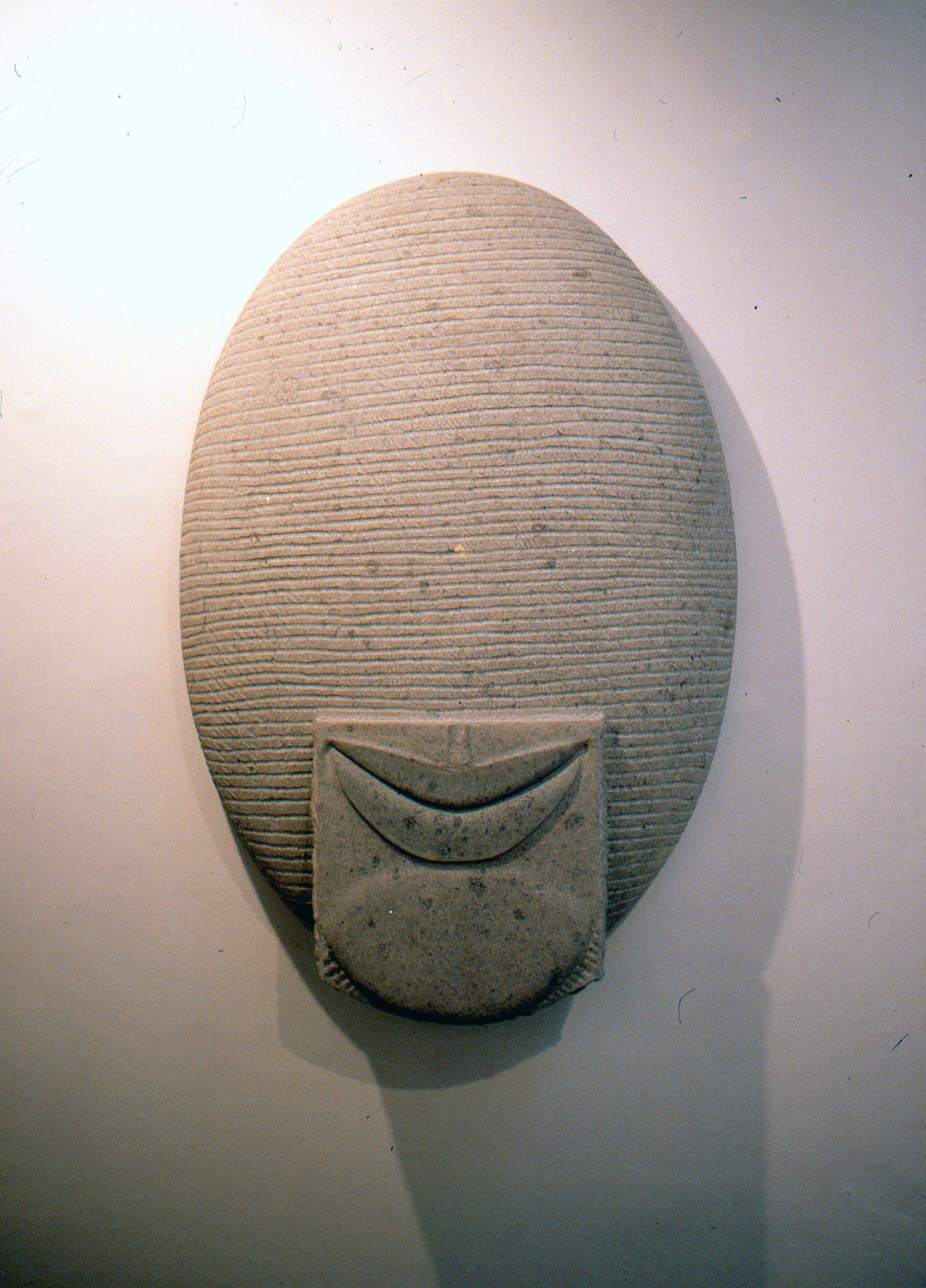

Works above: Traumatras I and Traumatras II, 1987


Two studies for 'Bay', 1987
Two studies for 'Bay', 1987
Coloured chalks
Height 59.5 cm x Width 82.5 cm
British Museum Collection


See more works in the British Museum Collection:


Study for Ganepathi and Devi, 1988
Study for Ganepathi and Devi, 1988
Pastel and charcoal on paper
38.4 cm x 55.7 cm
Tate Collection
See more works in the Tate Collection:


Crowned Torso, 1988
Crowned Torso, 1988
Pastel and charcoal on paper
213.1 cm x 124.3 cm x 3.3 cm
Tate Collection
See more works in the Tate Collection:

Kani, 1988
Black Indian granite and cotton cloth of various colours with oil
60 x 500 x 46 cm (23 1/4 x 196 3/4 x 18 inch)
Private Collection


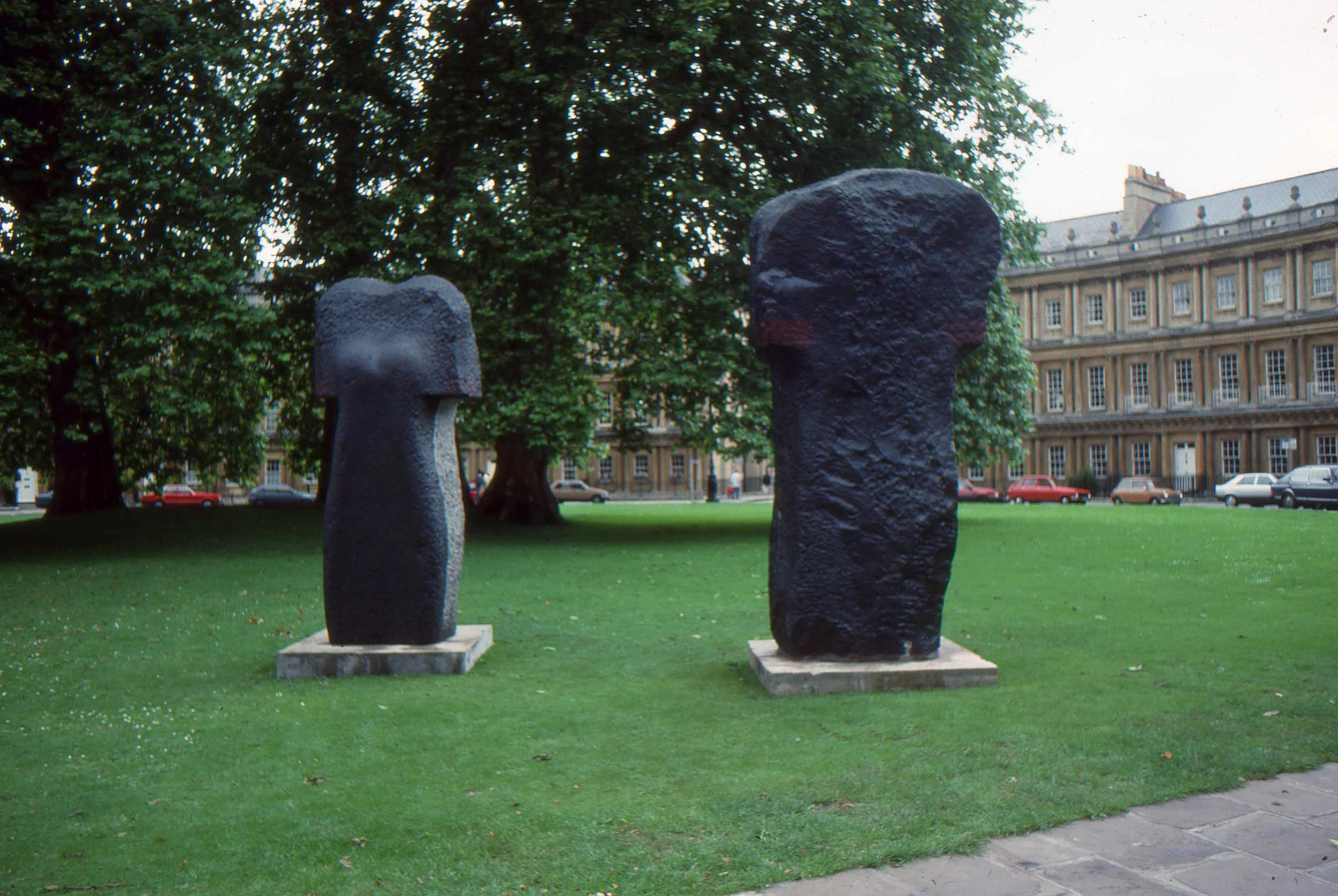
Ganapathi and Devi, 1988
Dolorite
A: 332 x 163 x 105 cm
B: 308 x 127 x 96 cm
Broadgate Properties PLc, London
It’s 5,106 miles from London to the quarries of Mahabalipuram in Tamil Nadu, India. In 1988, this is where artist Stephen Cox sourced the stone for his monolithic, semi-abstract sculptures, Ganapathi And Devi, which now stand in Broadgate Plaza. Apart-yet-together, these complex works allude to sculptural torsos and ancient themes (Devi is the name of the female Hindu goddess while Ganapathi is the South Indian name for the popular elephant god, Ganesha) fusing the contemporary with the historical.


Vishnu Throng, 1988
Dolorite, with red and white colour and oil
145 x 145 x 7cm
Galleria Carini, Florence
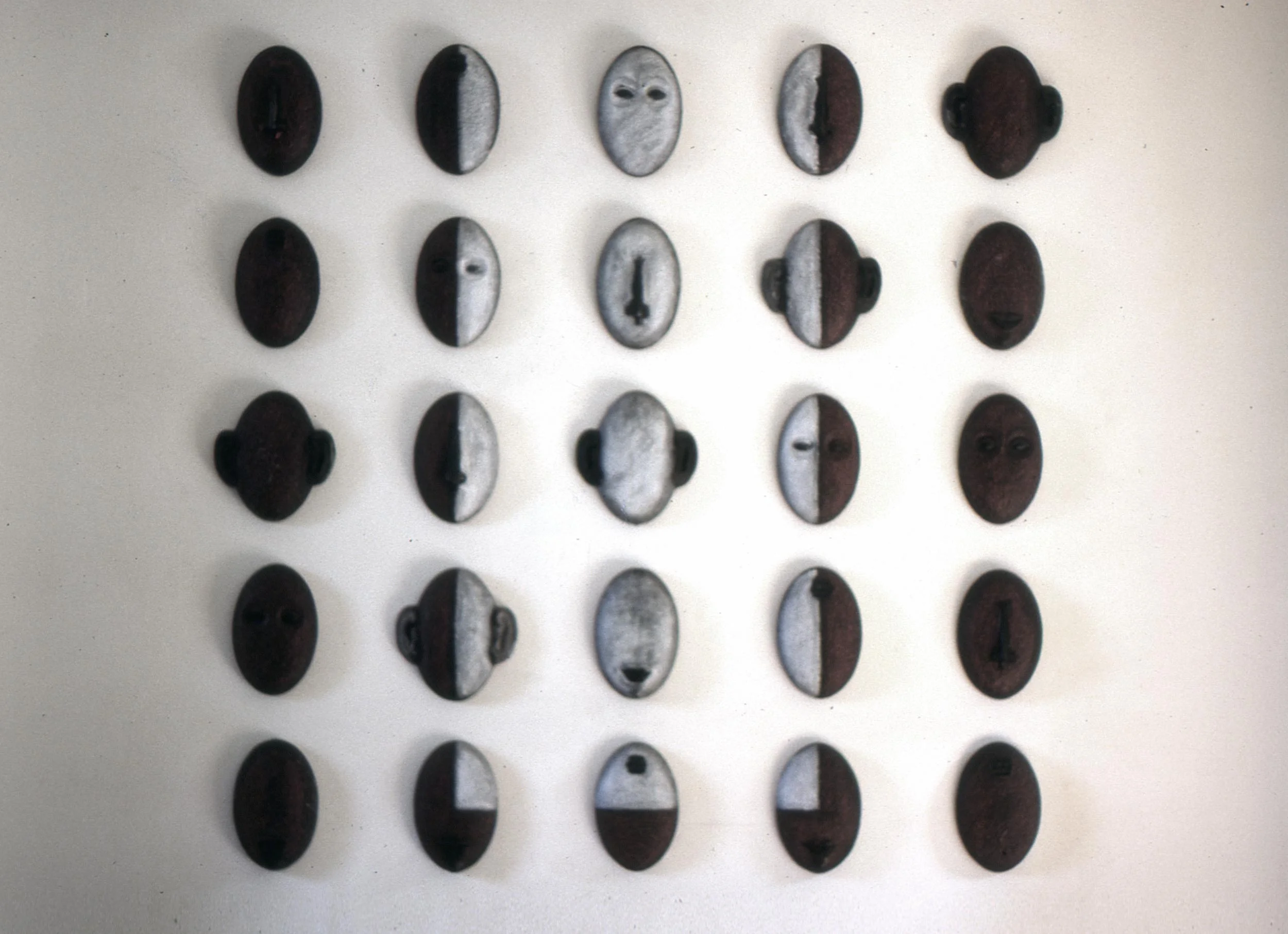


Siva Throng, 1988
Black Indian Granite with Yellow and White colour and oil
145 x 145 x 7 cm
The Artist


Organs of Action, 1988
Black Indian granite with oil
5 elements
Each 186 x 61 x 23 cm
Photographed at the Cass sculpture foundation
Private Collection, UK


Holy Place, 1988
Holy Place; A timber-like structure, framed by red and white rectangular shapes, [pictured in black and white] 1988
Oil and graphite on India paper
British Museum Collection
See more works in the British Museum Collection:
Chrysalis, 1989–91
Chrysalis, 1989–91
Porphyry
92 cm x 285 cm x 100 cm
Tate Collection
See more works in the Tate Collection:


Rishi, I, 1989


RISHI I , 1989 Basalt, ( variously: dolerite or black ‘granite’ or Charnockite).
175 x 90 x 45 cm including base
The Rishis are regarded as sages or seers who, after intense meditation, realized the supreme truth and eternal knowledge which they then translated into hymns. Stephen Cox’s sculpture entitled “Rishi I” represents a figure with the minimum intervention made on to the stone itself. The stone, basalt, was taken from a place where some of the oldest stones on the Earth’s surface can be found. It shows the scars and incisions of the quarry men who have used the most primary tools to release the block from its bed, where it has lain since long before the beginning of human recorded time. This act of releasing stones from a primordial era and bringing them into the light of today is central to Cox’s practice, as he strives to understand a universal language of sculpture.

Song, 1989
Song, 1989
Imperial porphyry and white diorite
A. 285 x 160 x 90 cm
B. 260 x 150 x 100 cm
New Opera House, Cairo

Flask, 1989-91
Flask, 1989-91
Hammamat breccia
183 x 80 x 50 cm
Installation British Museum
Private Collection Hong Kong